
What is SEER2? Understanding HVAC Efficiency and Heat Transfer Fluids

Beginning January 2023, the U.S. Department of Energy (DOE) introduced updated energy-efficiency standards for heating and cooling systems. As part of this change, the familiar SEER rating was replaced by SEER2. SEER2 stands for Seasonal Energy Efficiency Ratio 2. It measures how efficiently an air-conditioning or heat-pump system cools a space over a typical cooling season. The updated testing process, known as M1 blower testing, uses higher air pressure to better represent how HVAC equipment performs after it is installed in a home. Simply put, SEER2 provides a more realistic measurement of a system’s energy efficiency.
Benefits of a Higher SEER2 Rating
Uses Less Energy
A higher-rated system uses less energy to cool your home and control humidity.
Lowers Cooling Costs
Using less energy may reduce your monthly utility bills.
Improves Indoor Comfort
High-efficiency systems can provide more consistent temperatures and better humidity control, keeping your home comfortable in hot and humid weather.
Lentus and HVAC Performance Products
SEER2 measures the cooling efficiency of qualifying HVAC equipment, but it is only one consideration in overall system performance. In hydronic and water-loop systems, the heat transfer fluid also plays an important role in protecting equipment and maintaining reliable operation. As high-efficiency HVAC and heat-pump technologies continue to grow, hydronic and water-loop systems, including air-to-water heat pumps, geothermal/ground-source systems, chilled-water systems, snowmelt, and other systems may require a propylene-glycol heat-transfer fluid for freeze protection.
In hydronic and heat-pump applications requiring freeze protection, selecting the proper inhibited glycol and concentration helps balance freeze protection, heat transfer, pumping requirements, corrosion protection, and long-term system performance. The growing shift toward heat pumps and electrification creates new opportunities for DOWFROST™ Heat Transfer Fluids. Air-to-water and hydronic heat-pump systems use water-based loops to support radiant floors, fan coils, and hydronic air handlers. When these loops contain outdoor or unconditioned components, DOWFROST™ HD provides dependable freeze and burst protection while supporting efficient heating and cooling performance.
Proper fluid testing and preventive maintenance, including concentration and freeze-point checks, fluid-condition analysis, system top-offs, and replacement can help maintain system protection over time. By offering DOWFROST™ products and related maintenance support, distributors can help protect HVAC equipment while developing a valuable source of recurring business.
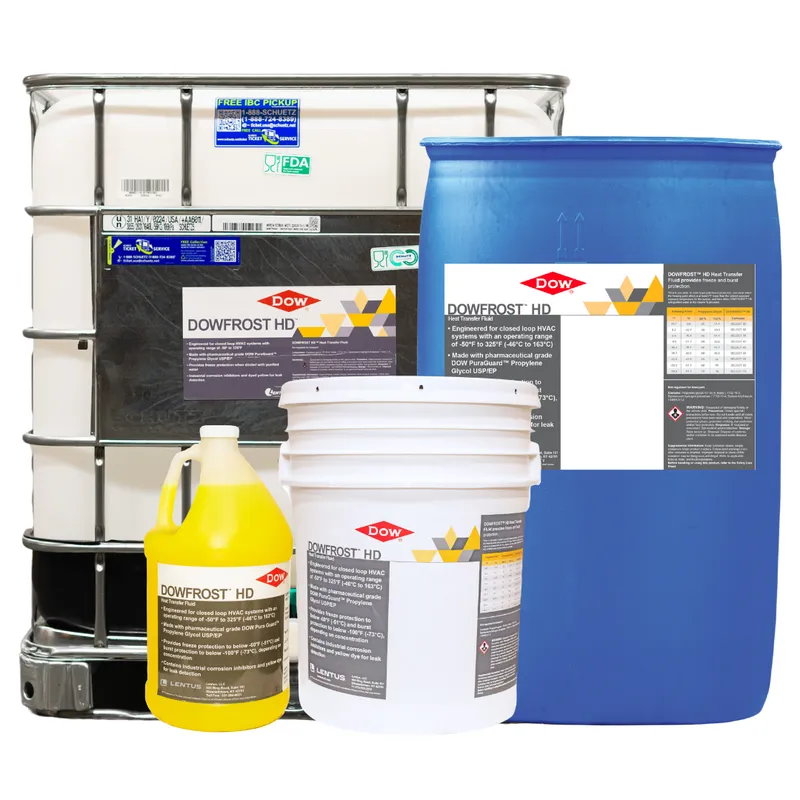
DOWFROST™ HD Heat Transfer Fluid
A heat transfer fluid formulated with 94% propylene glycol and a specially designed 6% blend of industrial corrosion inhibitors for HVAC applications.
Applications:
- Chilled-water and hydronic heating systems
- Geothermal heating and cooling systems
- Snow-melt and turf-heating systems
- Solar water-heating systems
- Commercial refrigeration systems
Features:
- Engineered for closed loop HVAC systems with operating range of -50°F to 325°F (-46°C to 163°C)
- Made with pharmaceutical grade DOW PuraGuard™ Propylene Glycol USP/EP
- Provides freeze protection to below -60°F (-51°C) and burst protection to below -100°F (-73°C), depending on concentration
- Industrial corrosion inhibitors offer additional protection for systems containing copper components
- Widely used wherever low toxicity, environmentally friendly heat transfer fluids are needed – schools and hospitals
- Fluorescent yellow for leak detection
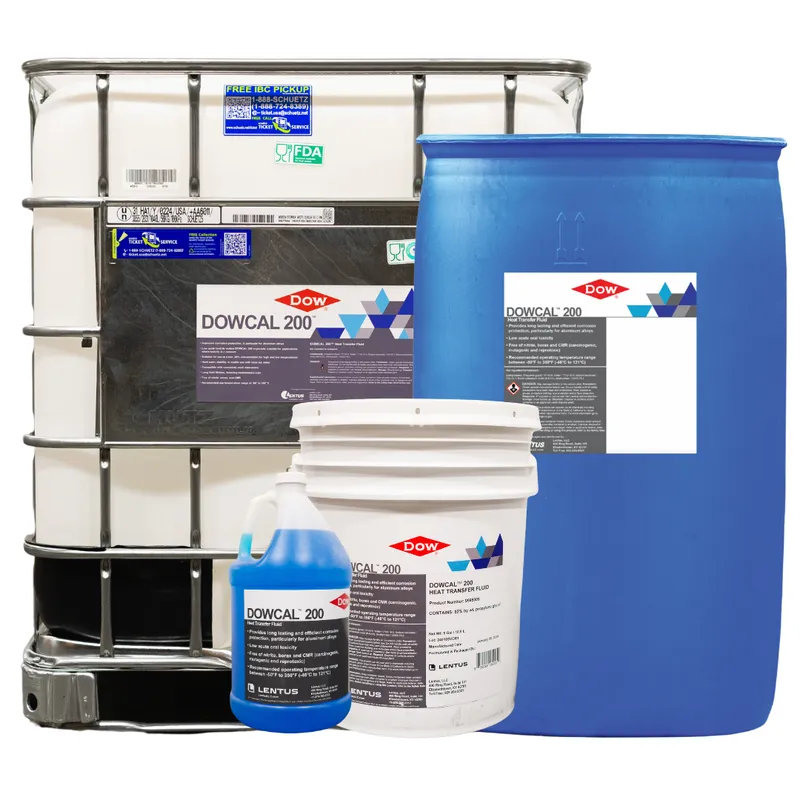
DOWCAL™ 200 HD Heat Transfer Fluid
Aluminum safe glycol used in a wide range of industrial, construction, and infrastructure applications. Its low acute toxicity makes it especially suitable for applications where toxicity is a concern and has a specially designed 8% package of corrosion inhibitors.
Applications:
- Solar heating
- Floor heating
- Snow melting systems
- Process heating
- Heat recovery
Features:
- Provides long-lasting and efficient corrosion protection, particularly for aluminum alloys
- Low acute oral toxicity
- Free of nitrite, borax, and CMR (carcinogenic, mutagenic, reprotoxic)
- Recommended operating temperature range between -58°F to 347°F (-50°C to 175°C)
- Long fluid lifetime, lowering maintenance costs
- Hard water stability to enable use with local tap water
- Compatible with commonly used elastomers
Explore our full selection of HVAC products: View the HVAC Product Catalog
Have questions or ready to place an order? Contact the Lentus team at Sales@LentusLLC.com or call +1 270-765-2212.
